


Seborrheic Dermatitis
- Feb 4, 2022
- 5 min read
Updated: Jan 30
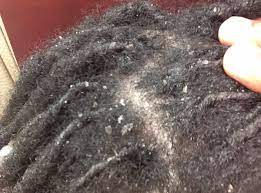
Hello and welcome back to Locs Talk, where I talk about all things Locs and Loose-Natural Hair. "Oh, the itching, the flaking, the dandruff... What is going on with my scalp!" This is a common question I am asked both by Loc'd and Loose Natural clients. Well, in this week's blog, we are going to discuss one of the most common causes of this problem, a condition called Seborrheic Dermatitis (seh-br-ee-uhk dr-muh-tai-tuhs), my pronunciation is always wrong, so I added the proper pronunciation of the words.
Seborrheic Dermatitis is a common skin condition that mainly affects the scalp. It causes scaly patches and stubborn dandruff. It effects oily areas of the body as well. So, what exactly is Seborrheic Dermatitis? It is a skin condition caused by an inflammatory reaction to excess Malassezia Yeast (an organism that lives on the skins surface). When it overgrows, the body's immune system overreacts to it, which then causes a flareup of irritated and flaking skin.
Seborrheic Dermatitis can be diagnosed by visual confirmation. No labs or allergy test are necessary to diagnose it. Seborrheic Dermatitis affects more than just your scalp, and the symptoms can be detected in other areas of the body, prior to it showing up on your scalp, this can help you to be proactive in keeping it under control. Let's look at the signs of visual detection.
Skin flakes (dandruff) on your scalp, hair, eyebrows, beard and mustache.
Patches of greasy skin covered with flaky white or yellow scales or crust on the scalp, face, sides of the nose, eyebrows, ears, eyelids, chest, arm pits, groin area and under the breast.
Red patchy skin. Which can be mistaken for Rosacea.
The most common cause for SD flareups is stress! With stress, a hormone called Cortisol is released. Cortisol increases sugars (glucose) in the bloodstream, enhances your brain's use of glucose and increases the availability of substances that repair tissues. Cortisol also curbs functions that would be nonessential or harmful in a fight-or-flight situation. Because of this reaction, it works horribly against the SD flareups, thus being the primary cause of your immune system going out of whack and overreacting when this happens.
Many have the misconception that their scalp is just dry and that's the reason for its flaking. Flaking may look as though it's dryness, but in fact it's not, its inflamed. I strongly advise against scratching inflamed scalp, especially in these cases which only causes it to get worse. Excessive scratching can also injure the hair follicles and result in hair loss.
Let's examine some of the resources that help treat Seborrheic Dermatitis to help keep it under control:
Medicated shampoo, which can be bought over the counter or prescribed by a certified dermatologist. I personally love the Neutrogena T-Sal brand. It's gentle and does the work that needs to be done and even more, it doesn't have that horrible medicine smell and is also sulfate free. Another great gem is Head & Shoulders Clinical. For extremely severe cases, prescribed shampoo from your dermatologist may be necessary.
Anti-Bacterial gels, which can be bought over counter, are recommended by dermatologist.
Hydrocortisone creams, which can be bought over counter, are also recommended by dermatologist.
Witch-hazel is great for soothing an inflamed scalp.
Aloe vera gel and aloe vera refresher spray, they are great for treating and also preventing Seborrheic Dermatitis flareups.
Let's look at some ways to avoid Seborrheic Dermatitis flareups:
Studies have shown that the diet contributes to SD flareups, especially highly processed foods. Avoiding prepackaged and fast foods filled with preservatives, can help tremendously.
Avoid using hair products that contain denatured alcohol. (ie. Styling gels, oil shine spray, and some brands of Mousse)
Avoid stress as much as possible. Meditation is great for reducing stress.
Wash the scalp/ skin regularly. You can wash your scalp often without having to do a full wash day.
- Using a clean white terrycloth face towel, a gentle shampoo, minimal amount; (I prefer using my made for locs ACV shampoo) and warm water.
- Gently massage the scalp using the fingertips and the cloth.
-Next, rinse the cloth thoroughly, followed by gently massaging a warm clean wet cloth to the scalp to cleanse the scalp of soap residue and any excess dirt.
-Finally, with a witch-hazel-soaked cotton ball, dab the scalp gently.
-Pat dry with a dry towel or made for locs brand microfiber towel wrap.
Avoid using excess oil on your scalp. Many believe the use of oil is the answer to curing SD and dry scalp, but in many cases, it causes MORE irritation and flareups. I've been told in conversation, "I use tea tree oil to treat my SD" Although, SD can be treated using tea tree oil, it is usually misused, which causes additional problems. Here are the facts that studies have shown about Teatree oil; tea tree oil is highly concentrated, therefore, it should not be applied directly to the skin without diluting it, because it causes even more irritation and inflammation is it is not diluted. I should be used in very small quantity. This is the primary cause of why I constantly tell my clients to take it easy using too much oil on their scalp. Some people learn the hard way of understanding the precautious steps to do things correctly.
*Note: Next week's blog, we are going to go further in depth talking about tea tree oil and other oils.
5. Using Aloe Vera gel and keeping the scalp moisturized regularly will help tremendously in reducing and keeping flareups minimized.
6. Apple cider vinegar is great for treating the scalp to avoid flareups as well. You can dilute it
in a spray bottle and spray your scalp and also when you wash your hair, I strongly
recommend using the Made For Locs ACV shampoo, not only is it a great clarifying
shampoo, but it is also great for treating and cleansing the scalp thoroughly, to help prevent
Seborrheic Dermatitis flareups.
Seborrheic Dermatitis is a skin/scalp condition that can affects all of us, whether we are Loose Natural or Loc'd. The good news is, it can be dealt with and kept under control with commitment and consistency. So, all the advice to treat flareups and to avoid flareups can be followed and done quite easily. On that note, if you are Loose Natural and you are considering Locs, but you suffer from severe Seborrheic Dermatitis, I strongly recommend treating your scalp and getting it under control before starting your Loc journey.
Once you are Loc'd and you begin to suffer from the effects of SD, a bad flare up can result in buildup in your Locs. Removing flakes from Locs can be challenging, use the above methods to treat your Locs. The Vegan loc detox soak can help you remove the debris left in your Locs from flareups.
Great products you can use to help treat your SD are:
-Neutrogena T-Sal shampoo
-Braggs organic ACV (always use diluted)
-Witch-hazel (gentle enough to use daily)
- Aloe Gel (99.75% per aloe) from Made for Locs
-ACV Shampoo from Made for Locs
-Light conditioning oil to avoid over oiling scalp from Made for Locs
- Black charcoal Shampoo from Made for Locs
-Vegan Detox Bar from Made for Locs
for all recommended products click the link in the drop menu above on the bar. If you have any additional questions about this subject, please post in the comments below. Thank you for your time and have a wonderful Loc journey.

![Locs Talk Live with Pammie
[The Significance of Products & How to Properly Use Them]](https://static.wixstatic.com/media/325997_a32fad765f1c4254a625bf7f664b7627~mv2.png/v1/fill/w_980,h_784,al_c,q_90,usm_0.66_1.00_0.01,enc_avif,quality_auto/325997_a32fad765f1c4254a625bf7f664b7627~mv2.png)
![Locs Talk Live with Pammie
[Live Q & A with visual recorded demonstration tutorials]](https://static.wixstatic.com/media/325997_3dcc6c49dca34c3e80f2b2ce7598df80~mv2.png/v1/fill/w_980,h_784,al_c,q_90,usm_0.66_1.00_0.01,enc_avif,quality_auto/325997_3dcc6c49dca34c3e80f2b2ce7598df80~mv2.png)
So glad I read up on this. Luckily I don't suffer from SD but now I know what to look out for 😊